
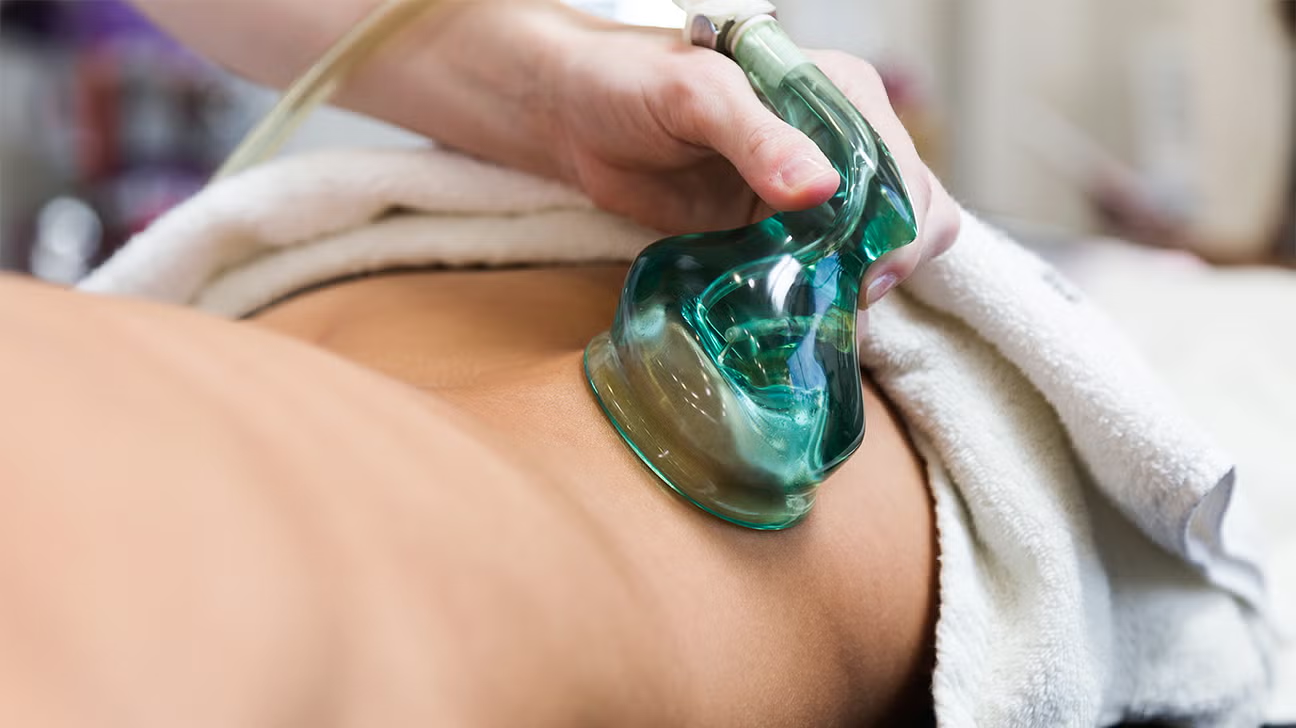
The contemporary pursuit of non-surgical gluteal contouring has led to the proliferation of various body treatments, one of the most widely utilized being vacuum butt therapy, often referred to as butt cupping or a non-surgical butt lift. This method utilizes mechanical suction to exert negative pressure on the gluteal tissues, a principle adapted from traditional cupping practices but executed with sophisticated, controlled devices. To truly grasp the impact of this procedure, one must move past the simplistic visual promises and delve into the underlying physiological responses that the sustained negative pressure elicits within the skin, the subcutaneous fat, and the underlying muscle fascia. The mechanism is not about generating new mass, but rather about manipulating existing tissue fluid dynamics and cellular environments to achieve a temporary, yet visibly enhanced, contour. The science is less about dramatic, permanent augmentation and more about a profound, localized microcirculatory stimulus.
…manipulating existing tissue fluid dynamics and cellular environments to achieve a temporary, yet visibly enhanced, contour.
The fundamental action of vacuum butt therapy is the application of controlled suction, which creates a negative pressure gradient between the surface of the skin and the interior of the applied cup. This force mechanically lifts the skin, subcutaneous fat, and the underlying muscle into the cup. The immediate, localized effect of this external traction is a profound enhancement of blood flow, known as hyperemia. By pulling the tissue outward, the capillaries and arterioles are dilated, significantly increasing oxygen and nutrient delivery to the treated area. This intense circulatory boost is theorized to be instrumental in improving the overall health of the gluteal tissue, fostering a better environment for cellular metabolism, and contributing to the sensation of firmness and ‘lift’ immediately following a session.
…By pulling the tissue outward, the capillaries and arterioles are dilated, significantly increasing oxygen and nutrient delivery to the treated area.
Beyond the vascular effects, the mechanical suction plays a crucial role in mobilizing static fluid within the interstitial spaces. The gluteal region, like many areas, can accumulate excess extracellular fluid and metabolic waste, contributing to a somewhat dimpled or spongy texture, often associated with the appearance of cellulite. The rhythmic suction and release cycle—a signature of many modern vacuum therapy devices—effectively acts as a powerful manual drainage technique. This stimulation of the lymphatic system encourages the flushing of toxins and retained fluid away from the treated area. The immediate visual improvement following a session is often heavily reliant on this enhanced lymphatic clearance, which reduces localized swelling and contributes to a smoother, tighter appearance of the skin envelope.
…This stimulation of the lymphatic system encourages the flushing of toxins and retained fluid away from the treated area.
The appearance of cellulite is fundamentally linked to fibrous septae—connective tissue bands that tether the skin to the deeper fascia—which, when coupled with outward pressure from subcutaneous fat, create the characteristic dimpled texture. While vacuum therapy is not a definitive cure, the intense mechanical manipulation may temporarily address these structural irregularities. The sustained suction, coupled with the massaging action of the cups, works to stretch and momentarily loosen these fibrous bands. This temporary release of tension, combined with the overall plumping effect of the increased blood and interstitial fluid volume in the area, can visibly smooth the skin surface, making the appearance of cellulite less pronounced, offering an aesthetic benefit that lasts until the tissues settle back into their resting state.
…The sustained suction, coupled with the massaging action of the cups, works to stretch and momentarily loosen these fibrous bands.
An intriguing, yet less proven, aspect of vacuum therapy is its purported impact on adipocyte behavior. Some proponents suggest that the mechanical stress of the suction can induce a localized form of lipolysis—the breakdown of fat—and even encourage the ‘redistribution’ or ‘mobilization’ of superficial fat deposits from adjacent areas into the gluteal region. While the intense vascular stimulation certainly activates metabolic processes, the claim of inducing targeted, long-term fat cell growth or permanent migration into the buttocks lacks rigorous clinical substantiation. The noticeable volume enhancement is more accurately attributed to the aforementioned transient fluid shifts and localized tissue edema, rather than a definitive, lasting increase in viable fat cell mass, distinguishing it starkly from a surgical fat transfer procedure.
…The noticeable volume enhancement is more accurately attributed to the aforementioned transient fluid shifts and localized tissue edema…
Another critical, and often misunderstood, physiological effect relates to the dermal matrix itself. The mechanical stretching and release of the skin by the vacuum pressure acts as a powerful physical stimulus to the fibroblasts—the cells responsible for producing collagen and elastin. Over a series of treatments, this controlled micro-trauma and metabolic activation is believed to encourage a modest increase in the production of these structural proteins, which are essential for skin firmness and elasticity. While this cellular response is gradual and requires consistent sessions over time, it represents the potential for a more lasting improvement in skin quality, particularly in older individuals whose natural production of these proteins has declined.
…this controlled micro-trauma and metabolic activation is believed to encourage a modest increase in the production of these structural proteins…
The sensory component of the therapy is also significant, extending beyond the mere physical sensation of suction. The intense, localized stimulation can activate mechanoreceptors in the skin and muscle fascia, leading to a temporary reduction in muscle tension. Many vacuum therapy protocols incorporate a gentle, high-frequency vibrational component which is intended to mimic the effect of active muscle engagement. While not equivalent to a dedicated workout, this muscular stimulation is believed to assist in toning the gluteal musculature, providing a subtle but important contribution to the overall lifted appearance by temporarily enhancing muscle firmness and contour beneath the skin.
…this muscular stimulation is believed to assist in toning the gluteal musculature, providing a subtle but important contribution to the overall lifted appearance…
It is imperative to address the longevity of the effects, a point where the scientific reality often diverges from marketing claims. The immediate, dramatic lift and volume enhancement witnessed right after a session—the result of localized swelling and lymphatic drainage—is by its nature transient, typically subsiding within hours or a couple of days as the tissue fluid normalizes. To achieve and, more importantly, sustain the more nuanced benefits of improved skin texture and contour, patients must adhere to a structured and consistent treatment plan, often involving multiple sessions weekly or bi-weekly. This non-permanent nature underscores the difference between a mechanical manipulation of fluid and an actual surgical alteration of tissue volume.
…To achieve and, more importantly, sustain the more nuanced benefits of improved skin texture and contour, patients must adhere to a structured and consistent treatment plan…
The success of vacuum butt therapy is not solely a function of the machine; it is heavily influenced by the patient’s existing body composition and tissue health. Individuals who are close to their ideal weight and possess relatively good skin turgor tend to respond most favorably, as the treatment can maximize the visibility of their existing muscle and fat structure. Conversely, patients with significant skin laxity or substantial subcutaneous fat deposits may find the visual impact less pronounced, as the mechanical forces may not be strong enough to overcome these underlying biological and structural limitations. The procedure serves as an enhancement for the fit and contoured, rather than a solution for dramatic body transformation.
…The procedure serves as an enhancement for the fit and contoured, rather than a solution for dramatic body transformation.
Finally, the procedure is a part of a larger, integrated body contouring approach, a fact often obscured in isolation. Many clinics combine vacuum therapy with other modalities, such as wood therapy, radiofrequency treatments, or even low-level laser therapy, to create a synergistic effect. The vacuum’s ability to boost circulation and mobilize fluid makes the tissue more receptive to subsequent treatments aimed at fat breakdown or skin tightening. Therefore, understanding the science behind vacuum therapy requires recognizing its role as a powerful physiological primer, optimizing the tissue environment for a comprehensive, multi-modality strategy rather than operating as a solitary, isolated magic bullet for gluteal augmentation.
Harnessing negative pressure to boost gluteal microcirculation and lymph flow, vacuum butt therapy temporarily refines contour by managing fluid dynamics and enhancing skin texture.